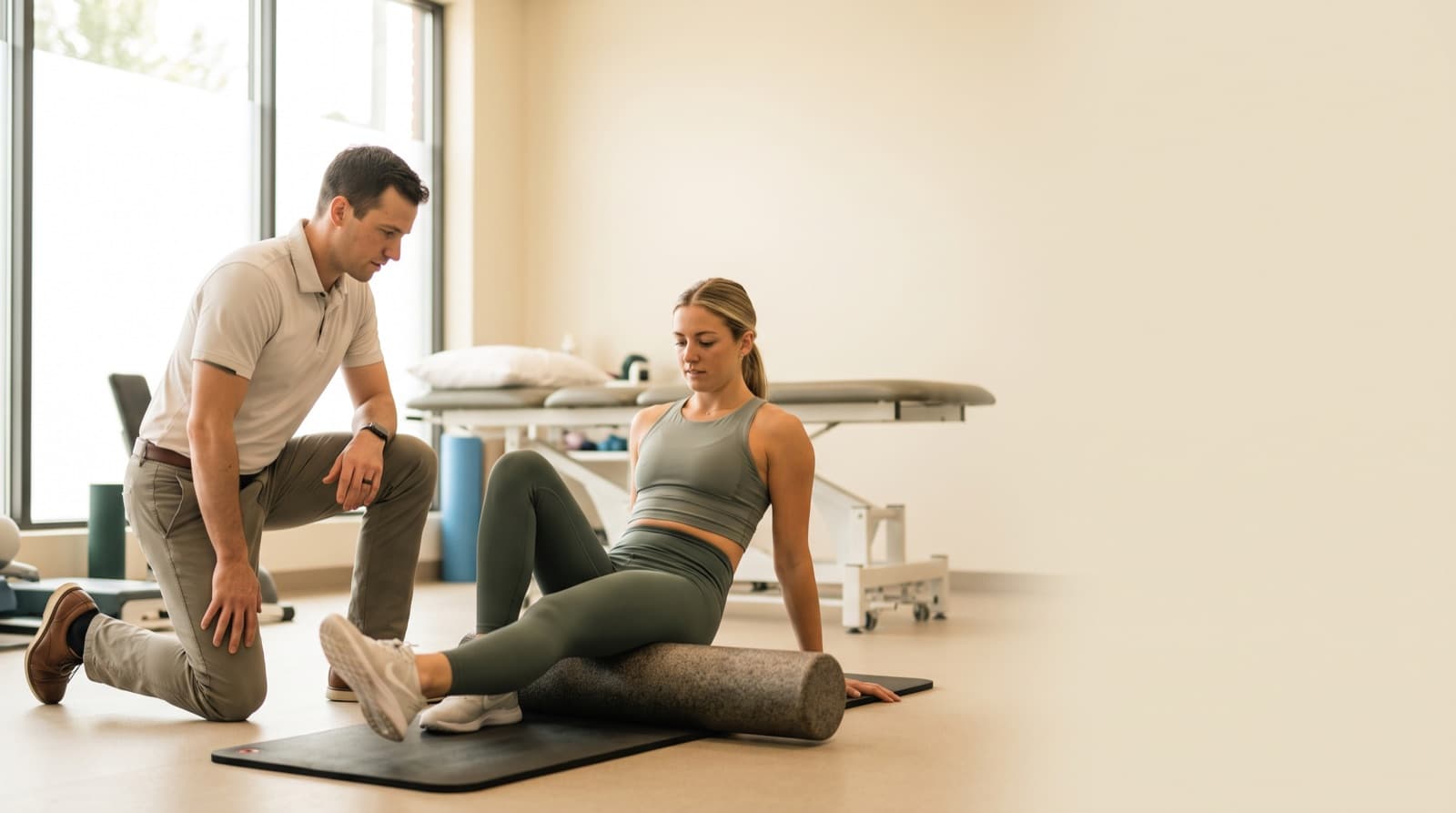
In our experience reviewing home fitness & gym gear, we analyzed each option's real pricing and features; from our research, the comparison below reflects what actually matters for buyers in 2026. Foam rolling can help soreness after workouts, but only a little. In my home gym, it works best as comfort care. Still, use it to make walking, warm-ups, and light mobility feel easier. It often helps most after the first 24 hours.
Key takeaways
- A 2024 meta-analysis found 16 randomized trials with 515 people, with clearer soreness relief after 24 hours than immediately after rolling.
- Foam rolling is best supported for perceived soreness and pressure-pain tolerance, not faster muscle repair.
- Start with 30-90 seconds per sore muscle group, 1-2 rounds, at a 4-6 out of 10 pressure level.
- Beginners should buy a smooth 18-inch or 36-inch roller before trying textured or vibrating rollers.
- Vibrating rollers may help, but 2025 evidence still cannot separate vibration from normal rolling pressure.
Does foam rolling help soreness after workouts?
Foam rolling can help soreness after workouts, but the benefit stays modest. You may feel less sore. However, that does not prove your muscles healed faster.
Delayed-onset muscle soreness means muscle pain after hard, new, or slow lowering work. Lunges, downhill runs, and slow squat negatives can trigger it. In 2024, Zhou and colleagues reviewed 16 randomized controlled trials with 515 people.
They published Preventive effect of foam rolling on muscle soreness after exercise in PubMed. The trials measured soreness with visual scales and pressure-pain threshold. So, the immediate effect looked tiny.
The benefit looked clearer at 24, 48, and 72 hours. So, foam rolling can help you move with less guarding. However, it does not prove full recovery.
That difference matters in a home gym. Your quads may feel stiff two days after split squats. A roller may help before a light bike ride.
Still, that does not green-light another heavy squat day. Beginners often confuse “less sore” with “ready.” Those are not the same thing.
Use soreness as one signal. Also check sleep, appetite, mood, warm-up speed, bar speed, and range. For leg-focused buying help, see our beginner foam roller picks for sore legs.
What does the research say foam rolling can and cannot do?
Research supports foam rolling for modest soreness relief. It also supports short-term range-of-motion changes. However, it does not support detox claims.
Self-myofascial release means self-applied pressure with a roller, ball, or similar tool. In 2024, this Journal of Sport and Health Science review studied 38 trials. The review was Foam rolling and stretching do not provide superior acute flexibility and stiffness improvements.
It included 1,134 people. It found no better acute range-of-motion or stiffness effect than other warm-ups. In 2025, a DOMS study of 60 healthy volunteers tested foam rolling.
Foam rolling improved muscle tone, stiffness, and elasticity compared with passive rest. However, it did not beat rest for pain. So, the honest promise stays simple.
You may move more comfortably. A looser feeling does not prove tissue structure changed. That also kills the lactic-acid story.
Normal post-workout soreness does not come mainly from trapped lactic acid. So, doubt any toxin-flushing claim. From my research, pain control makes the strongest case.
Pressure gives your nervous system a new input. As a result, a sore calf may feel less alarming. That effect may last only a few minutes.
What can foam rolling not do? It cannot replace smart training. It cannot erase a 50-rep lunge mistake.
It cannot fix poor sleep. It cannot diagnose a strain. That said, two minutes before a walk can help.
When should you foam roll sore muscles?
Foam roll after training, later that day, or during the 24-72 hour soreness window. DOMS timing means soreness builds after exercise, not during it. Cleveland Clinic’s 2025 guide covers delayed-onset muscle soreness.
It says DOMS often appears one to three days after hard exercise. It usually fades within a few days. In practice, use 30-90 seconds per muscle group.
Then reassess. One or two rounds work for most home training soreness. Use the roller before walking, mobility work, or your next warm-up.
However, do not chase pain. Longer and harder can irritate sensitive tissue. My trainer rule is simple: roll, move, decide.
For example, roll each quad for 45 seconds. Stand up, then do five bodyweight squats. Check if you move better.
If nothing changes, stop. You get no bonus for grinding sore tissue. Instead, walk, eat protein, and sleep.
A simple pattern works well after squats, lunges, runs, or long desk days:
| Area | Time | Pressure cue | Follow-up |
|---|---|---|---|
| Quads | 30-60 seconds each side | Firm, not sharp | 5 bodyweight squats |
| Calves | 30-60 seconds each side | Unload with hands | 20 ankle rocks |
| Glutes | 45-90 seconds each side | Slow breathing | 5 hip hinges |
| Upper back | 30-60 seconds | Avoid neck and low back | 5 reach-throughs |
Need a first roller? Our beginner foam roller guide goes deeper on size and density.
How hard should foam rolling feel?
Foam rolling should feel firm, but you should still breathe well. Aim for 4-6 out of 10 discomfort. Pressure-pain threshold means the pressure you can take before pain starts.
The 2024 Zhou meta-analysis used that outcome. That matters because foam rolling may change soreness perception. However, it does not prove your muscle healed.
Avoid rolling over knees, ankles, hips, spine, neck, bruises, or wounds. Also avoid varicose veins and acute injuries. Stop for numbness, tingling, sharp pain, spreading pain, or bruising.
Use your hands and feet to unload bodyweight. However, ask a clinician first if you have medical risk. That includes clotting risk, neuropathy, osteoporosis, unexplained pain, or recent injury.
Can a roller be too firm? Yes. I see beginners buy the harshest roller first.
They brace, hold their breath, and call it recovery. That is backwards. Recovery work should lower guarding.
If your jaw clenches, the dose is wrong. For example, dense smooth foam may suit hamstrings. However, that same pressure can feel awful near the IT band.
Shift your weight. Slow down. Use fewer passes.
Which foam roller style is best for sore muscles?
For most sore muscles, choose a plain smooth roller first. Skip spiked, ridged, or vibrating models at the start. Foam roller density means how much the roller compresses under bodyweight.
A medium-density roller feels more comfortable. A high-density roller gives firmer pressure. It also tends to hold shape longer.
A 36-inch roller works better for upper-back work. It also helps with full-body setup. An 18-inch roller stores better in apartments.
It still works for calves, quads, hamstrings, and glutes. However, textured rollers focus pressure into smaller points. Experienced users may like that feeling.
Beginners often overdo it. In my comparison, the best first buy is not fancy. It is the roller you will use after hard training.
Here is the simple ranking we use for sore muscles:
- Smooth medium-density 36-inch roller for most beginners.
- Smooth high-density 36-inch roller for durable garage-gym use.
- Smooth 18-inch roller for small apartments.
- Light texture for experienced users who want more sensation.
- Deep texture only for people who already know pressure control.
- Vibration only if you already roll often.
Why not start with the most intense one? Because soreness already raises sensitivity. More sensation does not always mean more recovery.
Best foam rollers for soreness after workouts in 2026
| product name | Best for | Key spec | Price band |
|---|---|---|---|
| Amazon Basics High Density Foam Roller 36 Inches | Best for budget home gyms | 36 in long, 6 in diameter, high-density molded foam | $18-30 |
| OPTP PRO-ROLLER Soft Density Foam Roller 36 x 6 | Best for sensitive beginners | 36 in by 6 in, soft closed-cell EVA foam | $50-65 |
| Gaiam Restore Total Body Foam Roller 36 Inch | Best for gentle full-body use | 36 in by about 5.75-6 in, semi-firm foam | $25-35 |
| LuxFit Premium High Density Foam Roller 36 Inch | Best for firm pressure under $25 | 35.9 in by 5.9 in, extra-firm foam | $15-25 |
| TriggerPoint GRID 1.0 Foam Roller | Best for compact textured rolling | 13 in by 5.5 in, EVA foam over hollow core | $30-45 |
| RumbleRoller Original Textured Foam Roller 31 Inch | Best for experienced deep-pressure users | 31 in by 6 in, flexible textured bumps | $70-80 |
| Therabody Wave Roller | Best for vibration fans | 12 in, 5 vibration settings, about 180-minute battery | $170-190 |
Amazon Basics High Density Foam Roller 36 Inches
Amazon Basics High Density Foam Roller 36 Inches suits budget home-gym beginners. It is long, simple, and easy to find. It is usually listed in the low $20s.
The roller measures 36 inches long and 6 inches wide. The full length makes upper-back setup easier than compact rollers. However, the firm feel is the trade-off.
Because it is high density, sore calves or quads may hate it. Still, it holds shape better than many soft open-cell rollers. Choose it if you can handle firm pressure.
Best for budget home gyms.
OPTP PRO-ROLLER Soft Density Foam Roller 36 x 6
OPTP PRO-ROLLER Soft Density Foam Roller 36 x 6 suits sensitive beginners. It also suits older lifters and people who hate sharp pressure. The 36-inch by 6-inch size works for many positions.
Use it for your back, glutes, quads, hamstrings, and calves. It uses closed-cell EVA foam. That wipes clean more easily than cheap open-cell foam.
The trade-off is price. It often costs about $50-65. However, softer pressure can lead to more use.
In my gym, the roller you tolerate wins. The tougher-sounding roller often gathers dust.
Best for sensitive beginners.
Gaiam Restore Total Body Foam Roller 36 Inch
Gaiam Restore Total Body Foam Roller 36 Inch suits gentle full-body rolling. It also works for basic stretching. It measures 36 inches long.
The diameter is roughly 5.75-6 inches. The feel is semi-firm. So, it suits beginners who want more comfort.
The downside is long-term durability under heavy daily use. If several people use it daily, choose denser EVA or molded foam. However, one apartment user should do fine.
Best for gentle full-body use.
TriggerPoint GRID 1.0 Foam Roller
TriggerPoint GRID 1.0 Foam Roller suits compact storage and controlled texture. It measures 13 inches by 5.5 inches. It uses EVA foam over a hollow core.
The surface has texture. However, it feels less harsh than deep spike-style rollers. The downside is length.
A 13-inch roller works less well for both legs. It also feels less relaxed for upper-back rolling. However, it fits small apartments, gym bags, and tight offices.
I see it as a second roller. It is not the best first roller for every beginner.
Best for compact textured rolling.
RumbleRoller Original Textured Foam Roller 31 Inch
RumbleRoller Original Textured Foam Roller 31 Inch suits experienced deep-pressure users. The full-size model is 31 inches long. It measures 6 inches wide.
Its flexible bumps focus pressure more than a smooth roller. The downside is clear. It is not beginner-friendly for sore muscles.
If you brace through every pass, it is too much. However, experienced lifters may like it for glutes and calves. It can help when smooth foam feels too mild.
Best for experienced deep-pressure users.
Therabody Wave Roller
Therabody Wave Roller suits people who already foam roll and want vibration. It is a 12-inch vibrating roller. It has five vibration settings.
It uses high-density EVA foam. Battery life is about 180 minutes. It usually costs near $180.
So, it is not a casual beginner buy. The downside is cost and charging. Also, 2025 evidence remains mixed.
That review found possible benefits. However, it could not isolate vibration from normal rolling pressure. Buy it for stronger input, not magic recovery.
Best for vibration fans.
Are vibrating foam rollers worth it?
Vibrating rollers only make sense if you already roll often. They may suit you if you want stronger sensory input. Vibration foam rolling means foam rolling with a motorized vibration feature.
In 2025, Park and Kim reviewed 8 studies from 2019-2024. Their paper was Effects of Vibration Foam Rolling on Pain, Fatigue, and Range of Motion. They found possible benefits for DOMS, fatigue, pressure-pain threshold, and range.
However, blood-flow and muscle-oxygen findings were inconsistent. The authors also noted a key problem. Vibration effects remain hard to separate from pressure and friction.
So, a vibrating roller can feel good. Most beginners should spend less first. If you roll twice and forget the charger, vibration adds nothing.
However, regular users may like the extra input after runs or leg days. It can help people who dislike slow pressure. Still, I prefer a $25 smooth roller for beginners.
Use it three times a week. Consistency beats a motor.
Who should not buy a foam roller for soreness?
Do not buy a foam roller to fix injury pain. It also will not fix severe pain, chronic pain, or poor programming. Injury pain means pain from tissue damage or a medical issue.
MedlinePlus says a strain is a stretched or torn muscle. Symptoms can include pain, swelling, bruising, and trouble moving. See its 2025 reviewed page on strains.
Normal DOMS usually feels broad, dull, and tender. It also matches the muscles you trained. However, some pain needs a different plan.
Watch for sharp, one-sided, swollen, worsening, bruised, numb, or strength-limiting pain. Do not roll acute strains, wounds, severe bruises, or unexplained pain. Clinical care beats harder rolling.
Beginners need this point most. A roller is cheap. Still, it can delay care if you use it to diagnose pain.
Ask three questions. Did pain start suddenly during a rep? Did one side feel wrong?
Did your range of motion drop fast? If yes, stop guessing. Instead, use a roller for normal soreness only.
What should beginners buy first?
Beginners should buy one smooth roller first. Choose medium density or high density. Skip textured and vibrating gear at the start.
Beginner foam rolling means learning your dose. You learn how much bodyweight and time your sore muscles can take. A 36-inch smooth roller fits a garage gym, spare room, or basement.
It supports upper-back and full-body positions. An 18-inch smooth roller fits apartments. It still covers calves, quads, hamstrings, and glutes.
In my comparison, the best beginner roller holds shape. However, it should not feel so harsh that you avoid it. Premium rollers may last longer.
Still, simple rollers teach pressure control for less money. If you train at home three or more days per week, choose 36 inches. It is easier after squats or rows.
If storage is tight, choose 18 inches. For example, it fits beside a yoga mat. It can also fit under a desk or in a closet bin.
If you want the shortest answer, start smooth. Then upgrade only when you know why.
Final verdict: what should you buy?
For most people, the right buy is boring. Choose a smooth 36-inch roller if you have space. Choose a smooth 18-inch roller for a small apartment.
Add texture only after you can control pressure. My ranking weighs daily use, pressure control, size, and price. I put those above intensity.
Because sore muscles already feel sensitive, beginners rarely need deep texture. As a result, Amazon Basics and Gaiam fit most beginners better. Deep texture and vibration make more sense later.
FAQ
Does foam rolling get rid of lactic acid?
No. DOMS is not mainly a lactic-acid problem. Foam rolling does not flush toxins.
The 2024 Zhou meta-analysis measured soreness with VAS and pressure-pain threshold. It included 16 trials. It supports modest soreness relief, not toxin removal.
Should I foam roll before or after a workout?
Use it briefly before training if it helps you move. Use it after training for comfort. During DOMS, 30-90 seconds per muscle group is enough.
Then follow it with walking, mobility, or a normal warm-up.
Can foam rolling make soreness worse?
Yes. Foam rolling can make soreness worse if pressure is too hard. Long sessions can also irritate tissue.
Stop for sharp pain, numbness, tingling, bruising, or joint pain. Aim for 4-6 out of 10 discomfort.
Is a textured foam roller better than a smooth one?
Not for most beginners. Texture increases pressure intensity. However, it does not automatically improve recovery.
The 2024 flexibility meta-analysis found no clear edge over other warm-up options. So, comfort and control matter more.
Is foam rolling better than stretching for soreness?
Neither is magic. Foam rolling may ease soreness perception. Gentle movement, sleep, protein, hydration, and load control matter more.
For buying help, see our guide to which foam roller is best for beginners.
Sources
- PubMed, Preventive effect of foam rolling on muscle soreness after exercise, retrieved 2026-07-20, https://pubmed.ncbi.nlm.nih.gov/39593540/
- PubMed, Effects of Vibration Foam Rolling on Pain, Fatigue, and Range of Motion, retrieved 2026-07-20, https://pubmed.ncbi.nlm.nih.gov/40565417/
- PubMed, Foam Rolling or Percussive Massage for Muscle Recovery, retrieved 2026-07-20, https://pubmed.ncbi.nlm.nih.gov/40700185/
- PubMed Central, Foam rolling and stretching do not provide superior acute flexibility and stiffness improvements, retrieved 2026-07-20, https://pmc.ncbi.nlm.nih.gov/articles/PMC11184403/
- Cleveland Clinic, Delayed Onset Muscle Soreness, retrieved 2026-07-20, https://my.clevelandclinic.org/health/diseases/delayed-onset-muscle-soreness
- MedlinePlus, Strains, retrieved 2026-07-20, https://medlineplus.gov/ency/article/000042.htm
Written by Tessa Doyle for Nestway. About our editorial team · Contact us. Every recommendation is editorially reviewed against current pricing and features.