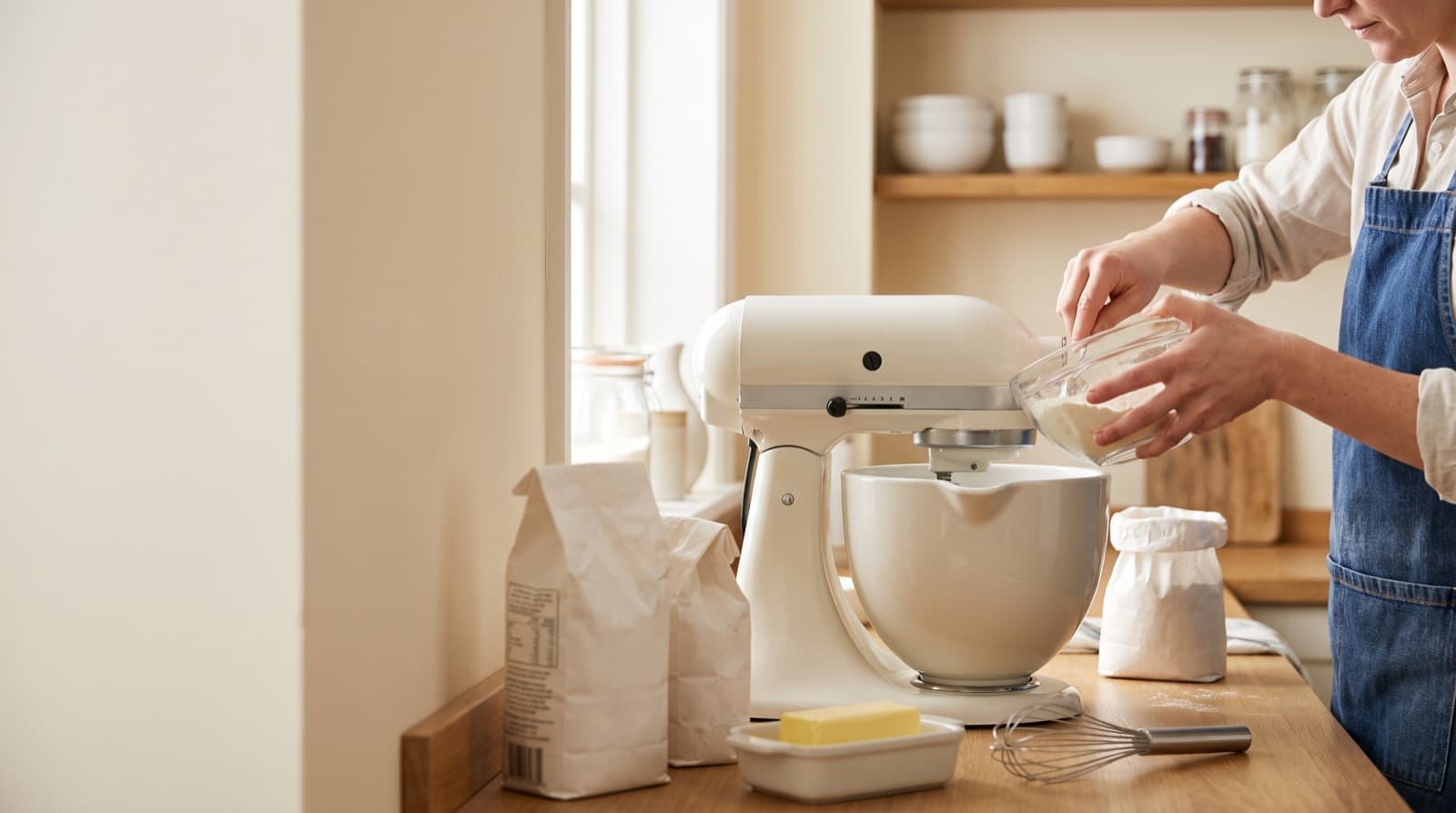
In our experience reviewing kitchen & cooking gear, we analyzed each option's real pricing and features; from our research, the comparison below reflects what actually matters for buyers in 2026. A good cheap stand mixer handles cake, cookies, frosting, whipped cream, and soft dough. However, bread every weekend needs a heavier machine. Save for that instead.
Key takeaways
- Under about $150, buy a stand mixer for batters, buttercream, whipped cream, and cookie dough, not weekly bread.
- Most budget mixers sit around 3-6.5 quarts, but 4-5 quarts is the sweet spot for many home cooks.
- Wattage alone is a weak signal because bowl size, gear design, weight, speed control, and dough limits matter more.
- Occasional pizza dough is not the same job as two whole-wheat loaves every Sunday.
- A used or refurbished premium mixer can beat a new cheap mixer, but warranty risk matters.
| product name | Best for | Key spec | Price band |
|---|---|---|---|
| Dash Everyday 3 Quart Stand Mixer | Tiny kitchens and boxed cake mixes | 3-quart bowl, 250 watts, 6 speeds | $40-$60 |
| Hamilton Beach 4 Quart Electric Stand Mixer 63390 | Most light-duty home bakers | 4-quart bowl, 300 watts, 7 speeds | $100-$130 |
| Beautiful by Drew Barrymore 5.3 Quart Tilt-Head Stand Mixer | Style-first occasional bakers | 5.3-quart bowl, 300 watts, 12 speeds | $90-$130 |
| Aucma 6.5 Quart 660W Tilt-Head Stand Mixer | Big bowls on a tight budget | 6.5-quart bowl, 660 watts, 6 speeds plus pulse | $130-$180 |
| Cuisinart Precision Master 5.5 Quart Stand Mixer SM-50 | Better build below premium prices | 5.5-quart bowl, 500 watts, 12 speeds | $200-$320 |
| GE Appliances 5.3 Quart Tilt-Head Stand Mixer | Heavier budget-upgrade pick | 5.3-quart bowl, 350 watts, 7 speeds | $190-$260 |
What is a good inexpensive stand mixer for most home cooks?
A good cheap stand mixer mixes and whips without premium money. In practice, that means cakes, muffins, cookies, buttercream, potatoes, and cream. It can handle small soft dough batches too.
However, it should not act like a bread machine. Most cheap stand mixers cost about $80-$150. Common bowl sizes sit around 4-5 quarts.
Bigger bowls help with double batches. Still, they can miss one egg white or a small frosting. I treated “good” as workload fit.
Budget stand mixers save money upfront. However, they often lose on noise, stability, repair, and parts support. That matters if you bake often.
Before you buy, ask what you make twice a month. If it is cake, cookies, and frosting, cheap can work. If it is bagels or brioche, save.
For smaller counters, also read our guide to the best stand mixer for small kitchen. Size and storage matter more than people admit.
How we picked
We compared street prices, bowl size, watts, speeds, weight, attachments, warranties, and workload fit. We looked for models you can find in 2026. We skipped discontinued unicorns.
For example, Dash lists a 3-quart bowl, 250 watts, and 6 speeds at Target. Hamilton Beach lists 300 watts and 7 speeds. Cuisinart SM-50 lists 5.5 quarts, 500 watts, 12 speeds, and a 3-year warranty.
We also checked recent buyer talk. A July 15, 2026 r/Breadit thread favored heavier mixers for bread. One KitchenAid Pro owner reported 10 years of bread use.
However, that owner also called the machine very loud. Another user praised Ankarsrum as a splurge mixer. That thread shows sentiment, not lab proof.
My marker was simple. I ranked duty cycle first, price second, and watts third. A mixer that survives your habits beats a loud motor claim.
What is a good inexpensive stand mixer if you bake rarely?
Dash Everyday 3 Quart Stand Mixer is the bare-minimum stand mixer I would consider. It fits tiny kitchens and rare baking. It suits students, apartment cooks, and boxed cake fans.
It has a 3-quart bowl, 250 watts, and 6 speeds. So, use it for light batters and whipped cream. However, do not buy it for bread.
The low weight makes it easy to store. Still, that same low weight hurts stability. Think pancakes, cupcakes, cornbread, or small frosting batches.
However, a hand mixer may be smarter if you bake five times a year. A stand mixer must earn its cabinet space. If you only whip cream for holidays, skip it.
What is a good inexpensive stand mixer for most light-duty bakers?
Hamilton Beach 4 Quart Electric Stand Mixer 63390 is my practical cheap pick. It works best as a hand mixer upgrade. It has a 4-quart stainless bowl and 300 watts.
It also has 7 speeds, planetary mixing, a whisk, dough hook, and flat beater. The price often sits around $100-$130. However, bread dough remains the stress test.
Use it for cookies, cakes, frosting, and occasional soft pizza dough. Do not use it for stiff dough every weekend. This is the mixer I would suggest first.
The 4-quart bowl is not huge. Instead, that helps with normal home batches. One cake mix does not turn into a scraping chore.
Because it is still a budget machine, keep expectations sane. Soften butter first. Stop and scrape the bowl.
Do not run dense dough for long stretches. If the head jumps, stop. If the motor smells hot, you asked too much.
Which inexpensive stand mixer looks better on the counter?
Beautiful by Drew Barrymore 5.3 Quart Tilt-Head Stand Mixer is the style pick. It still has useful specs. It fits occasional bakers who care about looks.
It lists a 5.3-quart bowl, 300 watts, and 12 speeds. You also get a splash shield, flat beater, dough hook, and whisk. Sale prices often land near $100.
However, the lighter body is the trade-off. It is prettier than it is strong. Use it for cookies, muffins, and buttercream a few times monthly.
The larger bowl helps with holiday batches. For example, sugar cookie dough fits better than in a 3-quart bowl. Double boxed brownies also fit better here.
However, bigger is not always better. Small batches can sit below the beater path. You may scrape more with one-stick buttercreams.
Which cheap stand mixer has the biggest bowl?
Aucma 6.5 Quart 660W Tilt-Head Stand Mixer is the big-bowl budget option. It fits families that bake bigger light batches. It lists a 6.5-quart bowl and 660 watts.
It also has 6 speeds plus pulse and a tilt-head design. The common price band is about $130-$180. However, the large bowl handles small batches less neatly.
Replacement-parts confidence also trails KitchenAid. From our research, Aucma makes sense when capacity beats polish. Think three dozen cookies or cake layers.
That said, do not trust the 660-watt number alone. Wattage is not kneading strength. A cheaper drivetrain can still strain under stiff dough.
For instance, bagel dough asks far more from the motor than whipped cream. Low-hydration pizza dough does too. Use this mixer with restraint.
What inexpensive stand mixer is worth stretching for?
Cuisinart Precision Master 5.5 Quart Stand Mixer SM-50 is the stretch pick. It sits below premium-machine prices. It fits serious home bakers who skip weekly bread.
It lists a 5.5-quart stainless bowl, 500 watts, and 12 speeds. You also get die-cast metal construction. The listed warranty is 3 years.
Current pricing often runs from about $200 to $320. However, that puts you near used KitchenAid prices. The Cuisinart is not the cheapest answer.
Instead, it is the “buy less flimsy” answer. I like the bowl size. It feels generous, yet not silly for cake work.
Because it costs more, compare it against refurbished premium mixers. A used KitchenAid Artisan or Pro may last longer. However, a new Cuisinart may feel less risky.
What budget-upgrade mixer feels more stable?
GE Appliances 5.3 Quart Tilt-Head Stand Mixer is a heavier budget-upgrade option. It suits cooks who want more counter stability. It avoids true luxury pricing.
It lists a 5.3-quart bowl, 350 watts, and 7 speeds. You also get die-cast construction and about 20 pounds of weight. Street prices often sit around $190-$260.
However, it is not bargain-basement cheap. Some listings vary by color and stock. Weight matters when dough climbs the hook.
A heavier mixer tends to walk less. In our comparison, the GE stood out for weight. Its listed weight nears premium tilt-head territory.
However, price decides its appeal. Near $200, it is compelling. Near $300, compare refurbished KitchenAid Pro models first.
Can an inexpensive stand mixer handle bread dough?
Most cheap stand mixers can handle occasional soft dough. However, they are not right for frequent bread baking. Bread dough loads motors and gears for minutes.
Soft pizza dough once a month is one thing. Two whole-wheat loaves every Sunday are another. Recent r/Breadit sentiment from July 15, 2026 favored heavier machines.
One KitchenAid Pro user described 10 years of bread use. However, that user also noted loud operation. Another praised Ankarsrum as a splurge machine.
You can read the public discussion in the July 2026 Breadit stand mixer thread. Treat it like kitchen-counter talk from bread people. Useful, but not proof.
So what should a bread baker do? Save. A heavier, repairable mixer often costs less over 10 years.
Who should buy a cheap stand mixer instead of saving for a heavier one?
A cheap stand mixer fits a light-duty baker who wants ease. It does not fit brute-force dough work. Light-duty baking means cakes, muffins, boxed mixes, and frosting.
It also means cookies, meringue, whipped cream, and holiday batches. Think a few times a month. It is a hand mixer upgrade.
If you hate holding a hand mixer, this upgrade feels real. Butter and sugar can take 4 minutes. If you bake only on Thanksgiving, keep the hand mixer.
This is the reader I would match to the Hamilton Beach 4-quart model first. It costs less than premium machines. Still, the bowl fits normal home baking.
For another appliance-size example, our air fryer size guide for a family of four uses the same logic. Capacity should match habits, not fantasy dinner parties.
Do you make frosting at 9 p.m. before a birthday? Then a stand mixer earns its keep. Do you bake once a quarter? Keep the hand mixer.
Who should not buy an inexpensive stand mixer?
Do not buy a cheap stand mixer for bread dough, bagels, or big enriched doughs. Also skip one for high-hydration dough several times weekly. Budget mixers can move those doughs briefly.
However, that does not make them the right tool. Weekly bread bakers should save for a heavier machine. The better answer may be “wait and save.”
Bagel dough is especially rough. It is stiff, dry, and punishing. Enriched dough can also climb hooks and strain motors.
If bread is your hobby, look at KitchenAid Pro or Ankarsrum Assistent Original. Another heavy machine with clearer parts support can also work. Ankarsrum is expensive, but bread bakers like its bowl-driven design.
What specs actually matter on a budget stand mixer?
The key specs are bowl capacity, speed control, weight, attachment quality, warranty, and dough capacity. Bowl capacity means usable mixing volume in quarts. Speed control means how well it starts slow.
Dough capacity means the maker’s flour or finished dough limit. Wattage matters less than shoppers think. Brands measure and market it in different ways.
A 660-watt label does not promise better kneading. In practice, I look at weight before watts. A 4.7-pound mixer behaves differently than a 20-pound mixer.
Warranty also tells a story. Cuisinart’s SM-50 lists a 3-year limited warranty through retail pages. Dash and many cheaper models often list 1 year.
That does not prove quality. However, it changes your risk. For neutral testing context, TechGearLab reviewed the Aucma 6.5-quart model.
TechGearLab found it budget-friendly, with trade-offs. Those included splash guard fuss and a bowl attachment gap. See its Aucma 6.5-quart stand mixer testing notes.
How much should you spend on a good inexpensive stand mixer in 2026?
For a good cheap stand mixer in 2026, plan on about $80-$150. That range fits light-duty use. Below that, expect real compromises.
Those compromises include stability, bowl fit, attachment quality, and lifespan. Above that, compare carefully. You may enter used KitchenAid, refurbished KitchenAid, Cuisinart, or GE territory.
Sale prices change often. Check around Prime Day, Labor Day, Black Friday, and holiday baking season. Confirm current pricing before you buy.
My price logic is blunt. Under $60, I would usually buy a hand mixer. Around $100-$130, Hamilton Beach and Beautiful make sense.
Around $200, I start asking about used premium mixers. However, used machines carry risk. Ask about age, bowl type, missing attachments, noises, and returns.
A bargain with a grinding gear is not a bargain. So, test before you commit. Skip any mixer that sounds rough.
Is wattage a bad way to choose a stand mixer?
Wattage is not useless. However, shoppers often overvalue it. Wattage means the electrical power draw listed by the maker or retailer.
It does not show gear strength or hook torque. It also misses cooling design and overload behavior. For example, a 660-watt budget mixer may shake under stiff dough.
A heavier 350-watt mixer may feel steadier with cookie dough. So use wattage as one clue. Do not use it as the verdict.
Instead, check bowl size, weight, speeds, warranty, and maker warnings. Also scan manuals for overload language. If a manual says to cut batch size, listen.
This is the same buying discipline I use for ovens and air fryers. In our Ninja Crispi vs Breville Smart Oven Air Fryer comparison, raw power mattered less than usable cooking behavior.
What I learned from recent buyer chatter
Recent stand mixer chatter was thin. Still, the useful signal was clear. Bread bakers still talk about durability first.
In the July 15, 2026 Breadit thread, praise went to heavier machines. KitchenAid Pro and Ankarsrum stood out. The KitchenAid Pro anecdote covered 10 years of bread use.
However, it also included a noise complaint. The Ankarsrum praise focused on long-term satisfaction. It also noted careful setup and reading the instructions.
The X posts were mostly about inexpensive KitchenAid attachments. That tells me something too. KitchenAid owners keep buying into that attachment system.
Budget stand mixers rarely have that same parts story. As a result, I would not overbuy attachments for a cheap mixer. Buy it for the bowl, paddle, whisk, and hook.
If you want grinders, rollers, and slicers, save. Choose a platform with better long-term support.
Final verdict: which inexpensive stand mixer should you get?
Get Dash Everyday 3 Quart Stand Mixer if you bake rarely. It fits one-cabinet storage. It works for cake mix, whipped cream, and small frostings.
Get Hamilton Beach 4 Quart Electric Stand Mixer 63390 for the safest cheap pick. It fits cakes, cookies, buttercream, and occasional soft dough.
Get Beautiful by Drew Barrymore 5.3 Quart Tilt-Head Stand Mixer if counter style matters. It fits light recipes a few times a month.
Get Aucma 6.5 Quart 660W Tilt-Head Stand Mixer if you want a big bowl. Still, accept more scraping and parts uncertainty.
Get Cuisinart Precision Master 5.5 Quart Stand Mixer SM-50 if you can spend more. You get better build and a longer listed warranty.
Get GE Appliances 5.3 Quart Tilt-Head Stand Mixer if you want more weight near $200. Buy it when you find a good sale.
Do not get any of them for weekly bread, bagels, or large enriched dough batches. Save for KitchenAid Pro, Ankarsrum, or another heavier machine.
FAQ
Is a cheap stand mixer worth it?
Yes, a cheap stand mixer is worth it for cakes, cookies, frosting, mashed potatoes, and whipped cream. However, it is not worth it if bread dough is the main job.
What size stand mixer should I buy?
Most home cooks should look around 4-5 quarts. That size handles normal cakes and cookie batches without making small recipes awkward.
Is more wattage always better?
No. Drivetrain, stability, bowl design, speed control, and dough limits matter more than wattage alone. Higher wattage can still come with a light body.
Should I buy a hand mixer instead?
Yes, buy a hand mixer if you bake only occasionally or have limited storage. A hand mixer is cheaper, easier to store, and fine for simple batters.
What is the biggest mistake with budget stand mixers?
The biggest mistake is using them like heavy-duty bread machines. Stiff dough can overheat the motor and shorten the mixer’s life.
Written by Nora Kellerman for Nestway. About our editorial team · Contact us. Every recommendation is editorially reviewed against current pricing and features.