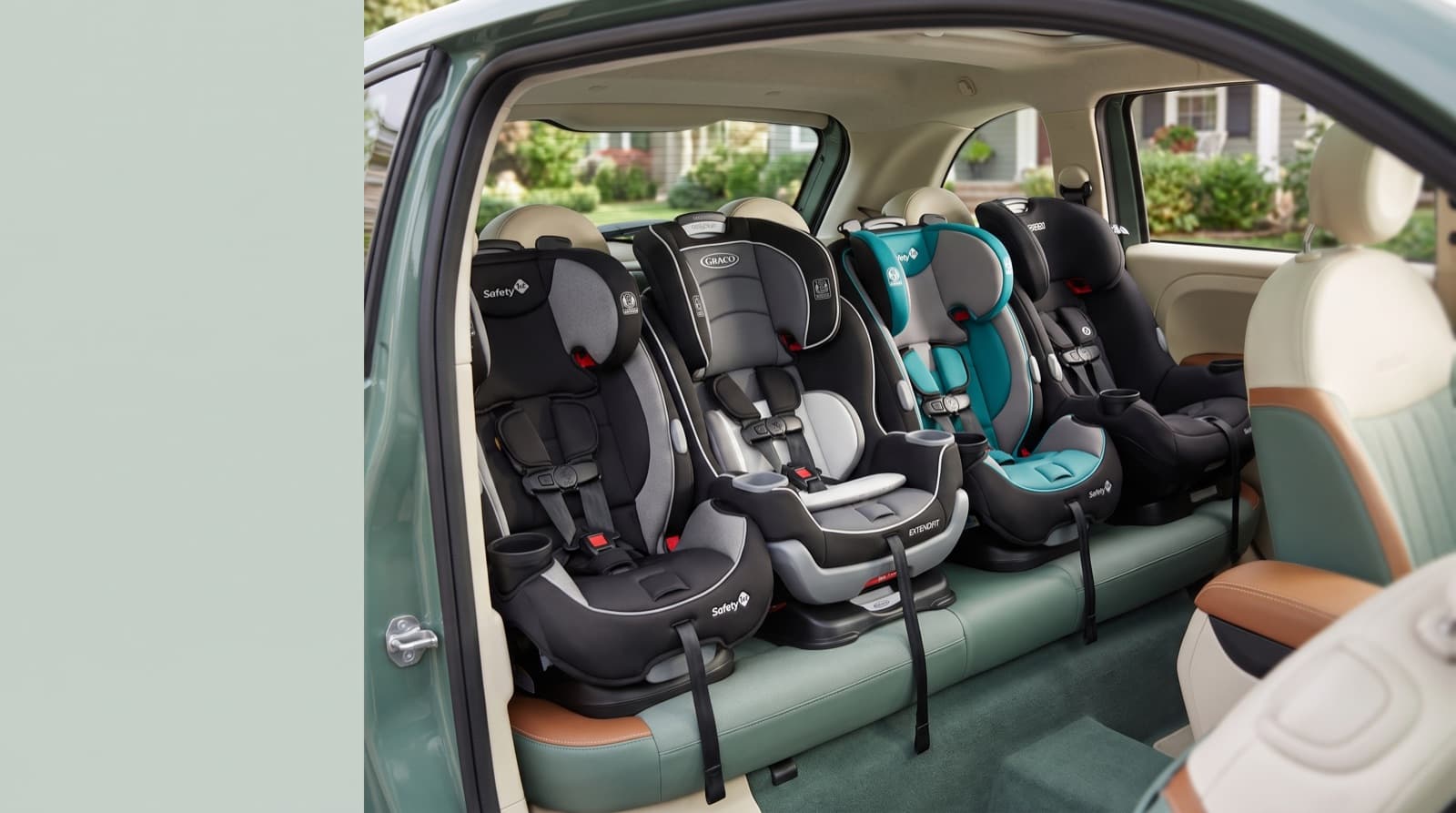
In our experience reviewing baby & toddler gear, we analyzed each option's real pricing and features; from our research, the comparison below reflects what actually matters for buyers in 2026. The best convertible car seat for small cars is the Safety 1st Ellaris 3-in-1 Convertible Car Seat. Pick it when back-seat space matters more than plush padding. In our comparison, I would try it first in a sedan, hatchback, or crowded second row.
Key takeaways
- Safety 1st Ellaris is our compact-first pick because it keeps the focus on narrow fit, 3-in-1 use, and less back-seat crowding.
- Graco Extend2Fit is better for tall rear-facing toddlers because it supports rear-facing use up to 50 lb and adds up to 5 inches of legroom.
- Safety 1st Grow and Go is the value pick around $130-$170, but its rear-facing recline can feel large in a small car.
- Maxi-Cosi Pria is the comfort pick, not the compact pick, because the plusher shell takes more room.
- Baby Trend Hybrid SI is not a rear-facing convertible seat, so it belongs only in the forward-facing and booster-stage conversation.
| Option | Best for | Key spec | Price band |
|---|---|---|---|
| Safety 1st Ellaris 3-in-1 Convertible Car Seat | Best for sedan and hatchback parents | 3-in-1 use, compact-first footprint | Check current retailer price |
| Graco Extend2Fit Convertible Car Seat | Best for tall rear-facing toddlers | Rear-facing to 50 lb, up to 5 inches extra legroom | Usually $200-$250 |
| Safety 1st Grow and Go All-in-One Convertible | Best for budget all-in-one use | 5-40 lb rear-facing, 22-65 lb forward-facing, 40-100 lb booster | Usually $130-$170 |
| Maxi-Cosi Pria All-in-One Convertible Car Seat | Best for comfort commuting | All-in-one use, machine-washable fabrics | Often $250-$320 |
| Baby Trend Hybrid SI 3-in-1 Combination Booster | Best for later-stage budget use | Forward-facing and booster stages only | Check current retailer price |
| Baby Trend Cover Me™ 4-in-1 Convertible Car | Best for sun-exposed back seats | Built-in canopy, 4.6-star owner rating | Check current retailer price |
What is the best convertible car seat for small cars in 2026?
The best convertible car seat for small cars is the Safety 1st Ellaris 3-in-1. Choose it when space matters more than plush trim. A convertible car seat works rear-facing first, then forward-facing later.
Some seats also become boosters. For small cars, we ranked fit first. That means width, cup holders, recline depth, and front-seat room mattered most.
All U.S. car seats must meet federal rules when used as directed. However, NHTSA says the right seat must fit your child, car, and daily use. You can review the basics in the NHTSA car seat guide.
Our ranking for small cars is:
- Safety 1st Ellaris 3-in-1 Convertible Car Seat
- Graco Extend2Fit Convertible Car Seat
- Safety 1st Grow and Go All-in-One Convertible
- Baby Trend Hybrid SI 3-in-1 Combination Booster
- Maxi-Cosi Pria All-in-One Convertible Car Seat
- Baby Trend Cover Me™ 4-in-1 Convertible Car
Why put comfort picks lower? Because a small car changes the job. A cozy seat can still crush front-passenger space.
Still, long use does not fix a hard buckle reach. A great seat should fit your real car.
Safety 1st Ellaris 3-in-1 Convertible Car Seat
Safety 1st Ellaris 3-in-1 Convertible Car Seat is best overall for small cars. I would try it first in sedans and hatchbacks. It gives you 3-in-1 use without asking too much from the back seat.
It fits parents who need rear-facing, forward-facing, and booster-style use. So it works well for a second child or narrow center seat. It also helps when a front passenger needs knee room.
The trade-off is comfort. This is not the softest seat here. If your car has room, Maxi-Cosi Pria feels nicer.
Graco Extend2Fit Convertible Car Seat
Graco Extend2Fit Convertible Car Seat is the practical runner-up. It solves a real toddler problem. It rear-faces up to 50 lb and adds up to 5 inches of legroom.
That matters when your 3-year-old still fits rear-facing by weight. However, your child may look folded in half. The leg panel can help.
This seat fits tall rear-facing toddlers. The American Academy of Pediatrics says children should ride rear-facing as long as possible. Keep them that way until they hit the seat maker’s height or weight limit.
That is the key idea behind the AAP car safety seat guidance. However, the leg panel can steal front-passenger room. Use the least intrusive safe position in a small car.
Safety 1st Grow and Go All-in-One Convertible
Safety 1st Grow and Go All-in-One Convertible is the budget pick. It has 3 modes. Use it rear-facing from 5-40 lb, forward-facing from 22-65 lb, and booster from 40-100 lb.
Its street price often lands around $130-$170. So it makes sense for grandparents’ cars or a second vehicle. It also helps families avoid a $250-plus seat.
For example, it fits an average-height child in a not-tiny car. You get one seat for several years. That value is the main draw.
The downside is rear-facing bulk. It is a good value seat. Still, it is not the smallest rear-facing install here.
Maxi-Cosi Pria All-in-One Convertible Car Seat
Maxi-Cosi Pria All-in-One Convertible Car Seat is the comfort pick. It covers rear-facing, forward-facing, and booster use. It stands out for soft padding and easy-care fabrics.
Some listed models have machine-washable and dryer-safe fabrics. Some also list dishwasher-safe cup holders. Check the exact model before you buy.
This seat fits one-child back seats best. In practice, comfort helps during drop-off, errands, and a 35-minute commute. Soft fabric matters when you buckle a child daily.
However, this is not my first pick for tight three-across. It often costs about $250-$320. That money buys comfort, not the narrowest fit.
Who should skip it? Parents with a two-door car should pause. So should tall front passengers and narrow-row families.
Baby Trend Hybrid SI 3-in-1 Combination Booster
Baby Trend Hybrid SI 3-in-1 Combination Booster is not a rear-facing convertible car seat. A combination booster faces forward first. Later, it changes into booster modes for bigger kids.
That makes it wrong for a newborn or rear-facing toddler. Instead, use it only after rear-facing is done. It can keep an older child harnessed longer.
The downside is stage mismatch. If you have a baby, this is not your seat. Do not buy it for an infant.
Baby Trend Cover Me™ 4-in-1 Convertible Car
Baby Trend Cover Me™ 4-in-1 Convertible Car is the sun-glare pick. It is not the compact-first pick. Its main feature is the built-in shade canopy.
The provided owner data shows a 4.6-star rating. That points to solid owner satisfaction. Still, owner ratings do not prove fit in your car.
This seat fits sun-exposed back seats. For example, it helps with a bright rear window. It can also help when clip-on shades never stay put.
However, the canopy adds visual and physical bulk. In a tight back seat, that matters. I would test Ellaris before this one.
Which best convertible car seat for small cars fits behind a front passenger?
In a compact back seat, front-passenger room often decides the winner. The seat should let an adult sit upright. Knees should not press into the dash.
Rear-facing depth means front-to-back space after correct recline. Safety 1st Ellaris should be your first test. Graco Extend2Fit comes next if you need its 50 lb rear-facing limit.
However, manage the Extend2Fit leg panel with care. Safety 1st Grow and Go is less ideal here. Its rear-facing recline can feel big in small sedans.
It still gives strong value. It rear-faces 5-40 lb, forward-faces 22-65 lb, and boosts 40-100 lb. So measure before you buy.
Here is my parent test. Can the front passenger sit hips back, feet flat, and knees relaxed? If not, the seat may fail your life.
Cup holders matter here, too. Fixed cup holders can widen the real footprint. Removable cup holders may help with side-by-side installs.
Which pick is best for tall toddlers who still ride rear-facing?
Graco Extend2Fit is best for tall rear-facing toddlers. It has a 50 lb rear-facing limit. Its leg extension buys more time before forward-facing.
Extended rear-facing means staying rear-facing until the seat’s limit. That limit may be height or weight. In a small car, install it before you buy.
The extra legroom is real. The panel adds up to 5 inches. Because kids grow unevenly, some families need it more.
Long legs do not mean your child has outgrown rear-facing. However, Extend2Fit can feel tight to adjust in small cars. Strap loosening and recline access can get annoying.
Those small issues add up in a narrow door opening. Its usual price is around $200-$250. Check current pricing before you buy.
Which pick is best if I need the lowest price?
Safety 1st Grow and Go is the budget pick. It often costs about $130-$170. It covers rear-facing, forward-facing, and booster use.
An all-in-one car seat covers several stages. Most start rear-facing and end as boosters. Still, Grow and Go is not the smallest rear-facing install.
The numbers are the appeal. It rear-faces 5-40 lb, forward-faces 22-65 lb, and boosts 40-100 lb. That range can delay another big gear buy.
However, do not buy on price alone. A $140 seat can still crowd the front seat. Would you rather save $60 once, or fight every morning?
If your back seat is moderate, Grow and Go makes sense. If your car is truly tight, measure Ellaris first.
Which seat is most comfortable for daily commuting?
Maxi-Cosi Pria is the comfort pick for daily commuting. It has soft padding and parent-friendly cleaning features. It also feels nicer for repeated short trips.
Daily commuting comfort means easy buckling, easy cleaning, and steady child comfort. However, Pria is not best for tight three-across installs. Its shell is larger than compact-first picks.
In our experience, comfort seats help on ordinary days. The padding helps on longer rides. The machine-washable, dryer-safe fabrics help after snack spills.
The dishwasher-safe cup holders also matter. Crackers, pouches, and sticky cups find every corner. So easier cleaning has real value.
That said, the Pria is big. It fits one-car-seat families better than 2 or 3 across. It often costs about $250-$320.
The trade-off should be clear. You pay for comfort and useful details. You do not pay for the narrowest installed footprint.
Should I buy the Baby Trend Cover Me 4-in-1 for a small car?
Baby Trend Cover Me 4-in-1 can make sense for sun glare. Buy it only if the canopy matters more than smallest fit. A built-in canopy is an attached shade inside the car.
The 4.6-star rating helps show owner satisfaction. However, the canopy and frame make it less compact. It is not the obvious small-car winner.
I understand the appeal. Sun glare can cause 20 minutes of crying. For example, afternoon light may hit the passenger side daily.
Still, bulk is bulk. A canopy can help with glare. It also adds one more piece near the door opening.
If your car has room, it may help. If the back seat is tight, test Ellaris first. Then compare Grow and Go.
For another compact vehicle-space example, our small-dog guides use similar measuring logic. See small dog booster car seat fit notes. Also see 35 lb small dog booster seat sizing and small dog car seat comparisons.
Who should not buy these seats?
Do not buy the biggest all-in-one seat for promised long use. Correct fit means fit for the child, car, and caregiver. You must install and use it correctly every ride.
If you drive a two-door coupe, skip bulky seats first. If you need three across, be careful. The Maxi-Cosi Pria and Baby Trend Cover Me may frustrate you.
If you need rear-facing, skip Baby Trend Hybrid SI. It is the wrong stage. It should not be used for a newborn.
Baby Trend Hybrid SI is a combination booster. It does not work rear-facing. Use it only for the right stage.
Maxi-Cosi Pria focuses on comfort. It has a larger shell. It suits one-child back seats better than tight three-across plans.
Safety 1st Grow and Go costs less. However, it is not the smallest rear-facing fit. So measure first.
The bigger point is simple. Daily correct use matters more than long-use claims. If cramped fit hurts harness use, pick another seat.
How should parents measure a small car before buying?
Measure your back seat before you shop. Check door-to-door bench width and usable center width. Then set the front passenger seat where the adult really sits.
Installed footprint means the real space a car seat uses. Cup holders, recline angle, and seat shape all count. A seat can fit on paper and still crowd you.
Start with rear bench width. Then measure seat-belt spacing, especially for the center seat. Next, check whether cup holders come off.
A half inch can matter. That is true when another seat or adult rides beside it. So do not guess from photos.
After that, set the front passenger seat normally. Do not cheat it forward for measurement. Finally, check recline rules in both manuals.
The trade-off is easy to miss. A narrow seat can still fail. The recline may push into the front seat.
How we picked
We picked these 6 seats because they were the required comparison set. Then we ranked them by small-car pain points. We did not rank by general popularity.
We studied 4 fit questions. First, how wide is the seat body? Second, how much do cup holders add?
Third, how much rear-facing depth does the seat need? Fourth, can a front passenger still sit normally? These questions match real small-car problems.
We also weighed stage fit. Not every seat here serves the same child. Graco Extend2Fit gets credit for a 50 lb rear-facing limit.
Safety 1st Grow and Go gets budget credit. It rear-faces 5-40 lb, forward-faces 22-65 lb, and boosts 40-100 lb. Baby Trend Hybrid SI loses points because it is not rear-facing.
From our research, one point stands out. The plushest seat is not the best small-car seat. The seat with fewer daily install fights wins.
For safety framing, we used NHTSA and AAP guidance. NHTSA focuses on choosing and using the right seat. AAP recommends rear-facing while the child fits the seat limits.
This article is gear guidance. It is not medical advice.
Final verdict: which one should you get?
Get Safety 1st Ellaris if compact-car space is your first problem. It is our first pick for sedans and hatchbacks. It also fits crowded second rows.
Get Graco Extend2Fit if your toddler is tall. It rear-faces up to 50 lb. However, manage the leg extension carefully.
Get Safety 1st Grow and Go for low-price all-in-one value. Measure rear-facing space before buying.
Get Maxi-Cosi Pria if comfort matters more than narrow fit. It suits one-child back seats best.
Get Baby Trend Hybrid SI only for forward-facing or booster-age kids.
Get Baby Trend Cover Me if sun glare is your daily problem. Make sure your back seat has room for the canopy.
FAQ
What is the most compact car seat on this list?
Safety 1st Ellaris is the first seat to test for compact-car footprint. It is our top pick when narrow fit matters more than premium padding.
Is Graco Extend2Fit good for small cars?
Yes, especially for tall rear-facing toddlers. However, the leg extension can reduce front-passenger room, so test the recline and panel position.
Is Baby Trend Hybrid SI safe for a newborn?
No. Baby Trend Hybrid SI is a forward-facing and booster-stage combination seat. It is not a rear-facing infant or convertible seat.
Can I fit three of these across?
Do not assume that. Measure your vehicle bench, seat-belt spacing, cup-holder width, and each seat’s official width before buying.
Are expensive convertible seats safer?
Not automatically. Correct fit, correct install, and correct daily harness use matter more than price.
Written by Rachel Nunez for Nestway. About our editorial team · Contact us. Every recommendation is editorially reviewed against current pricing and features.