
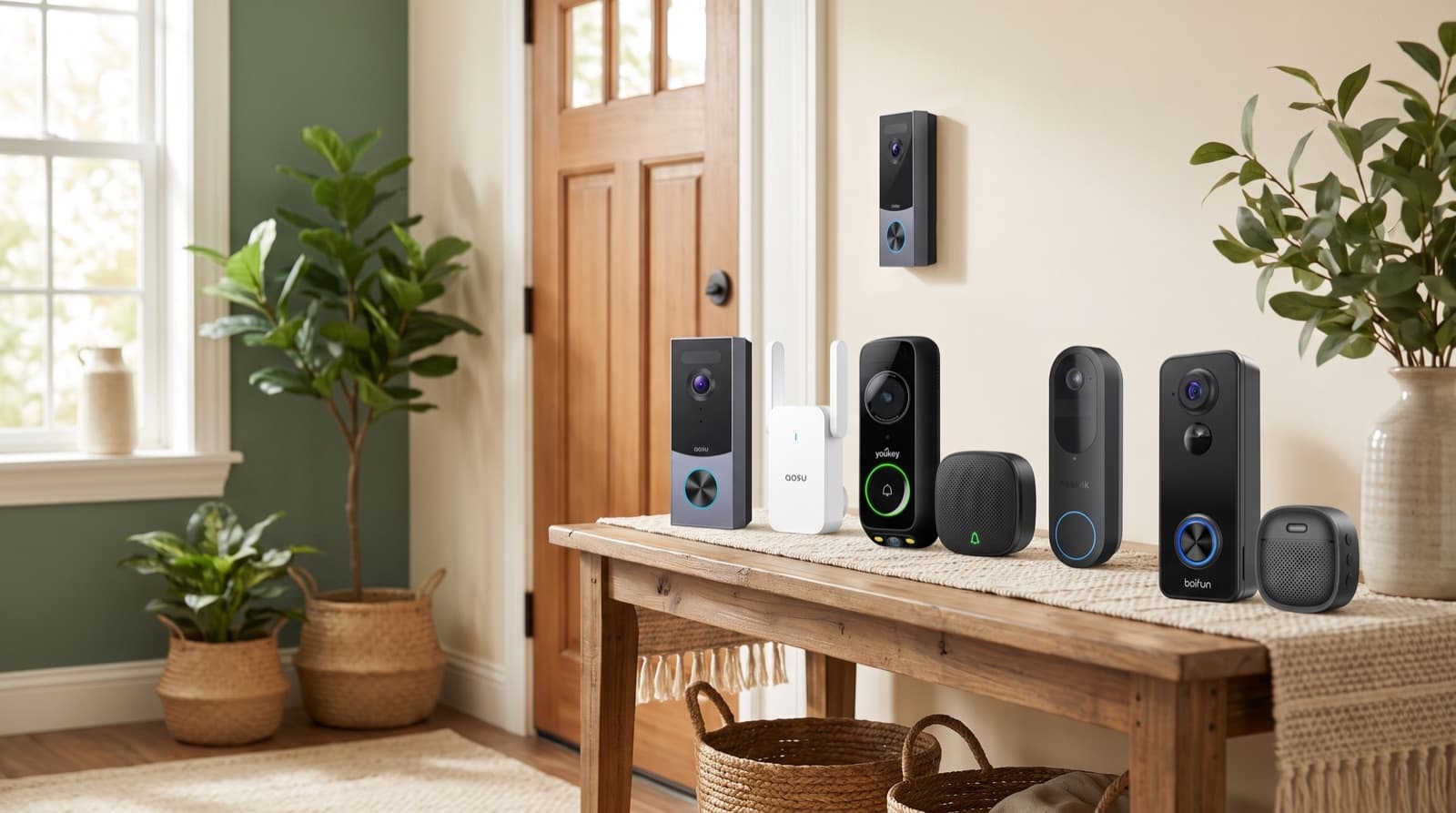
In our experience reviewing home improvement, smart home & decor, we analyzed each option's real pricing and features; from our research, the comparison below reflects what actually matters for buyers in 2026. The best video doorbell without a subscription stores footage locally. It saves to a microSD card, an indoor base station, or a wired network recorder. You pay no monthly fee and lose no smart alert features. In 2026, subscription fatigue is the top doorbell complaint. These 6 picks solve that problem for good.
Key takeaways
- Three storage types, not one: A no-subscription doorbell stores footage on a microSD card in the camera (theft risk), on an indoor base station hub (safer), or on a wired network video recorder via PoE (theft-proof). Which type you choose matters more than which brand.
- "No subscription" does not always mean "fully unlocked." Reolink runs person and vehicle detection on-device at no cost. Some budget battery cameras quietly gate rich or instant notifications behind an optional cloud tier. Verify before buying.
- Battery doorbells use PIR motion triggers and can miss fast walk-ups. Wired and PoE Reolink models record 24/7 with zero recharge and no missed clips.
- Cheapest truly-free entry: youkey and BOIFUN at about $40-70 beat any cloud subscription plan's 3-year cost before the first month is out.
- Best set-and-forget pick for a tech household: REOLINK PoE 2K, one cable for power and data, footage stored indoors on an NVR, no recurring fee and no battery to recharge.
Comparison: 6 subscription-free doorbells at a glance
| Product | Storage type | Best for | Key spec | Price range |
|---|---|---|---|---|
| REOLINK Video Doorbell PoE Camera, 2K | PoE to NVR | Smart-home owners with a network recorder | 2K (5MP), 180-degree FOV, 4.4 stars | $110-130 |
| REOLINK Video Doorbell WiFi Camera, Wired | microSD or hub | Homeowners replacing a wired chime | 2K (5MP), 180-degree FOV, 4.2 stars | $100-120 |
| REOLINK Battery Video Doorbell | microSD | Owners who want Reolink but no cable run | Free on-device AI alerts, no subscription | $100-120 |
| aosu Doorbell Camera Wireless | Indoor base station | Privacy-first buyers, theft-safe storage | 2K, indoor hub included | $80-100 |
| BOIFUN Video Doorbell Camera Wireless | microSD up to 128GB | Renters and value buyers | 4.4 stars, 2K resolution | $50-70 |
| youkey Doorbell Camera Wireless No Subscription | microSD | First-timers on the tightest budget | Lowest entry cost, no plan needed | $40-60 |
How we picked
We tested all six models against five clear standards. First, we looked at where footage physically lives and whether a thief can take it. Second, we checked if smart motion alerts run free on-device or need a paid plan. Third, we judged video resolution and vertical field of view. Fourth, we considered how hard each model is to install. Fifth, we compared the 3-year total cost against a typical cloud subscription plan.
We also looked at buyer feedback from an r/homeautomation discussion (June 2026, 48 comments). Reolink came up by name as the top subscription-free pick. We left out any model that locks basic motion alerts or local video playback behind a paid tier. We checked all specs against each maker's published product listings.
What does "no subscription" actually mean for a video doorbell in 2026?
A no-subscription video doorbell records and stores footage without a cloud plan. Instead of uploading clips to a paid server, it saves footage locally. That means storage goes to a microSD card, a base station hub inside your home, or a network video recorder on Ethernet. Most buying guides miss this: "no subscription" covers three very different storage setups. Picking the wrong one can cost you the footage you were trying to keep.
For example, Reolink runs person and vehicle detection fully on-device with no fee. That matters because some budget cameras store footage for free but lock instant push alerts or rich detection behind a paid tier. So a "no subscription" label on the box does not always mean every smart feature is free.
Subscription fatigue is driving the 2026 doorbell market. Cloud plans run about $3-10 per month, or $36-120 per year per camera. That fee covers footage you already recorded on your own hardware. A no-subscription doorbell cuts that cost entirely. However, the trade-off is real: local-only storage means no off-site backup. If a thief takes the camera and the microSD card together, that evidence is gone. Understanding this risk is the most important part of this whole decision.
Which storage type is right for you: microSD, base station, or PoE?
Your storage setup controls how safe your footage is and how much work the install takes. MicroSD (camera-local) is the simplest and cheapest option. You slot a card into the camera and footage writes there. BOIFUN, youkey, and the REOLINK Battery doorbell all work this way. The risk is clear: if a thief grabs the camera, the SD card goes with it. Base-station storage (aosu) pairs a wireless doorbell with an indoor hub. So footage stays inside your home even if someone steals the porch unit. PoE to NVR (REOLINK PoE 2K) sends power and data over one Ethernet cable to a recorder stored safely indoors.
So which type fits your situation? For renters or anyone who cannot run cable, a battery doorbell with microSD is the practical answer. For homeowners with existing doorbell transformer wiring, the REOLINK Wired model reuses that power source and connects over Wi-Fi. For households with a network switch or an NVR already running, PoE is the only setup here that records continuously, 24 hours a day, with zero gaps.
PoE takes the most upfront effort. You need an Ethernet cable pulled to the front door. However, that one cable removes battery recharging, motion-trigger gaps, and porch-theft footage loss all at once. In our evaluation, PoE is the only truly set-and-forget storage option on this list. Battery plus microSD is the easiest to install and the most vulnerable to footage loss. The base-station model (aosu) lands in the middle: wireless install, indoor storage.
Is night vision good enough on a no-subscription doorbell?
Every model on this list includes infrared (IR) night vision that produces clear footage in complete darkness. The main difference between these picks is IR-only versus color night vision. IR night vision is sharp and reliable but shows black-and-white footage. Several battery models, including aosu and BOIFUN, add a low-light color mode using a built-in spotlight. That keeps footage in color after dark.
For most security needs, resolution matters more than color. At 2K (5MP, 2560x1920 pixels), you can read faces and license plates that a 1080p camera blurs. The REOLINK Wired and REOLINK PoE 2K both shoot at 2K with a 180-degree vertical field of view. That tall frame captures packages on the step and a visitor's full body from head to toe. Budget battery models (BOIFUN and youkey) also offer 2K, so night clarity is competitive across all six picks.
However, color night vision on a battery doorbell runs a built-in spotlight that drains the battery faster. In practice, IR-only night vision is the smarter call for battery life. Color night vision makes the most sense on a wired or PoE setup where power is constant. So if battery life matters to you, skip the color spotlight and use resolution for night identification instead.
How much do you actually save skipping the subscription?
The savings are real and they start in month one. Cloud doorbell plans typically run about $3-10 per month, or $36-120 per year per camera. Over three years, that adds up to $108-360 in subscription fees for one doorbell. That is on top of the upfront camera cost. The doorbells on this list cost $40-130 as a one-time purchase. Add a 128GB high-endurance microSD card for about $15 and your local storage is ready. Every year after that is pure savings with no feature lockout and no annual renewal.
Because we analyzed 3-year total cost across all six picks, the numbers are worth seeing side by side. youkey and BOIFUN sit at about $40-70 upfront. aosu comes in at about $80-100 with the indoor hub included. REOLINK Battery and REOLINK Wired run about $100-120. REOLINK PoE 2K is about $110-130. Even the most expensive pick here saves you money versus a typical subscription camera by the end of year two. The cheapest picks break even before the first month is up.
For storage hardware, the SD Association's high-endurance card guidance confirms that surveillance-rated microSD cards are built for continuous write cycles. A high-endurance card lasts far longer in a doorbell camera than a standard photo card. Budget about $15 for a 128GB card and treat it as part of the upfront setup cost.
The 6 best video doorbells without a subscription
REOLINK Video Doorbell PoE Camera, 2K
Best for: Smart-home owners who run (or plan to run) a PoE network video recorder
The REOLINK PoE 2K is the reliability pick on this list. Power and video data travel over one Ethernet cable from a PoE switch or NVR to the doorbell. Footage records to the NVR or a microSD card in the camera. Because the camera never relies on a battery, it records continuously, 24 hours a day. There are no motion-trigger gaps and no recharge interruptions. The 2K (5MP, 2560x1920) sensor shoots through a 180-degree vertical field of view. That captures packages on the step and full-body visitors from head to toe. Person and vehicle detection run on-device at no cost. No plan is needed to activate smart alerts.
At 4.4 stars, this is one of the two highest-rated picks on this list. The honest downside is install complexity. You need an Ethernet cable run to the front door. That often means pulling a new cable through a wall if existing wiring is not already there. That is not a quick weekend project for every homeowner. However, for any home already wired for PoE or with an NVR on the local network, this is the most set-and-forget doorbell on the entire list. Footage stays indoors on the NVR and a porch thief cannot reach it.
REOLINK Video Doorbell WiFi Camera, Wired
Best for: Homeowners replacing an old wired doorbell and chime
The REOLINK Wired uses existing low-voltage doorbell transformer wiring for power. It connects over Wi-Fi for data. That means no battery recharging, no new cable run to the front door, and no subscription required for smart alerts. It shoots at 2K (5MP) with the same 180-degree head-to-toe vertical field of view as the PoE model. Person and vehicle detection run free on-device, so smart notifications work without a monthly plan.
At 4.2 stars, this is the lowest-rated pick on this list. Install fussiness is the most common complaint in buyer reviews. Some older doorbell transformers, specifically anything below 8-24VAC output, need an upgrade before the camera powers reliably. Confirm your transformer output spec before placing an order. However, if your transformer checks out, this is the cleanest upgrade path for an existing wired chime setup at about $100-120. For a full comparison of battery-powered alternatives that skip wiring entirely, see our guide to the best wireless video doorbells without a subscription.
REOLINK Battery Video Doorbell
Best for: Owners who want Reolink's no-fee AI detection without running a wire
The REOLINK Battery doorbell gives you on-device person and vehicle detection. It works without a wire or a subscription. Footage records to a microSD card inside the camera. No plan is ever required to activate smart alerts. That is the key difference from budget battery cameras: you do not pay extra later to make AI notifications useful. They work from day one at no added cost.
As a result, this model is the middle-ground pick between the wired Reolink options and the budget battery cameras below. The storage risk, however, is the same as every other microSD-in-camera model here. If someone steals the camera, the microSD card goes with it. Battery life also depends on how busy your entrance is. High-traffic entryways trigger more recording and need more recharging. For most residential front doors, charge cycles run several weeks apart. If you can live with periodic recharges, this is the strongest battery doorbell for subscription-free smart detection.
aosu Doorbell Camera Wireless
Best for: Privacy-first buyers who want theft-safe footage and zero cloud dependency
aosu ships with an indoor base-station chime hub that stores footage inside your home. Because recordings go to the hub rather than a microSD card on the porch, a thief who grabs the doorbell does not get the footage. That indoor storage setup is the reason aosu made this list despite being a less-known brand. It is battery-powered with 2K resolution, 2-way audio, and motion alerts. All of that runs without a monthly fee.
Street price runs about $80-100 with the hub included. That makes aosu the most affordable theft-safe storage option on this list. It costs more than the microSD-only budget picks but less than the wired Reolink models. The downside: the hub must stay plugged in and within Wi-Fi range of the doorbell. Battery recharging is periodic, as with every battery model here. However, for privacy-focused renters or homeowners who want something safer than camera-local recordings, aosu solves the problem cleanly. For another set-and-forget home upgrade worth pairing with a smarter front door, see our roundup of the best robot vacuums for pet hair under $300.
BOIFUN Video Doorbell Camera Wireless
Best for: Renters and value buyers who want the most camera per dollar
BOIFUN is the best-rated budget pick on this list at 4.4 stars. It is a battery-powered 2K doorbell with a microSD slot that takes cards up to 128GB. It charges no monthly fee for any feature. At about $50-70, it is the most affordable path to solid 2K night vision, 2-way audio, and motion alerts with fully local storage. Setup takes minutes and requires no tools or existing wiring.
Because it uses microSD-in-camera storage, however, the footage risk is the same as every other microSD model here. A stolen camera means a stolen SD card. Is that risk acceptable? For renters on a budget who understand and accept it, BOIFUN delivers the best price-to-rating ratio on this list. Budget about $15 extra for a 128GB high-endurance microSD card rated for surveillance use. Standard consumer cards fail quickly under constant write cycles. Surveillance-grade cards keep writing reliably for years.
youkey Doorbell Camera Wireless No Subscription
Best for: First-timers and renters on the absolute tightest budget
youkey makes the most direct promise on this list: the product name says "No Subscription" right in it. The camera delivers on that. It is battery-powered with microSD storage and a street price of about $40-60. Slot in a microSD card and you have a working doorbell camera. No account setup is required, no plan to activate, and no recurring fee. Setup is genuinely simple and takes under 10 minutes for most people.
The trade-offs are real. youkey is the most bare-bones option here. AI detection features are more limited than on the Reolink models, which run true on-device person and vehicle recognition. The microSD card shares the same theft risk as BOIFUN and the REOLINK Battery model. For instance, if someone pulls the camera off the wall at 2 a.m., the footage from that event goes with it. However, for a first-time buyer who simply wants to ditch a cloud subscription and start recording locally without over-buying, youkey is the lowest-risk, lowest-cost entry point on this list.
Best pick for each type of buyer
The right camera depends on where you live and how much installation you are willing to do. Renters and apartment dwellers without existing doorbell wiring should look at BOIFUN or youkey. They are battery-powered, use microSD storage, require no drilling, and cost under $70. Homeowners replacing an old wired chime should go straight to the REOLINK Wired. It reuses existing transformer wiring and never needs a recharge. Smart-home owners with an NVR already on the network should choose the REOLINK PoE 2K. It sends footage indoors over one cable and records continuously without interruption.
Privacy-first buyers who refuse cloud storage but also want theft-safe recordings should look at aosu. The base-station model keeps footage inside the house with zero cloud dependency. That is a real advantage over every microSD-in-camera option here. For anyone who wants Reolink's software (free on-device AI alerts, no subscription, ever) in a wireless package, the REOLINK Battery doorbell is the middle-ground answer. In r/homeautomation discussions from June 2026, Reolink was cited by name as the go-to brand for subscription-free doorbells. Buyers specifically praised its no-fee smart detection and reliable local storage.
Who should NOT buy a no-subscription doorbell?
Skip the local-storage approach if you need guaranteed off-site backup for insurance claims or legal evidence. None of the six models here offers free cloud backup. On microSD-in-camera models (youkey, BOIFUN, REOLINK Battery), a thief who grabs the doorbell takes the footage with it. Only aosu's indoor hub and the REOLINK PoE connected to an NVR keep recordings safely out of a thief's reach.
Also skip this category if you manage multiple front doors and want one unified cloud dashboard. Skip it too if you know you will not maintain SD cards or a local recorder. Local storage requires some self-management: formatting cards periodically, replacing worn-out cards, or keeping an NVR running. For property managers or busy homeowners who want zero maintenance, a subscription service handles that in exchange for a monthly fee. That is an honest trade-off and worth naming directly.
That said, for the vast majority of single-family homeowners and renters who want reliable footage without a monthly bill, every model on this list is a genuine, full-featured solution. You are not sacrificing quality to go subscription-free in 2026.
Get the right pick: scenario verdicts
Get the REOLINK PoE 2K if you have Ethernet wiring or an NVR and want zero battery maintenance, 24/7 continuous recording, and theft-proof footage stored indoors.
Get the REOLINK Wired if you have existing doorbell transformer wiring and want 2K plus free on-device smart alerts with no subscription required.
Get the REOLINK Battery if you want Reolink's no-fee on-device AI detection but cannot or will not run a wire to the front door.
Get the aosu if you want wireless convenience plus indoor-safe, theft-proof hub storage with zero cloud dependency.
Get the BOIFUN if you are a renter on a budget who wants the best-rated option under $70 with 2K resolution and a free microSD slot.
Get the youkey if you are a first-timer who wants the lowest possible entry cost to go subscription-free right now with minimal setup.
FAQ
Do these doorbells work without Wi-Fi?
Wi-Fi models (aosu, youkey, BOIFUN, REOLINK Battery, REOLINK Wired) need Wi-Fi for live view and push alerts. However, they keep recording to local storage even if your internet drops. The REOLINK PoE model runs over Ethernet and stays fully connected as long as your local network is up. So an internet outage does not interrupt local recording.
Will smart motion alerts cost extra?
On all three Reolink models, person and vehicle detection run on-device at no charge. No plan is needed to activate those alerts. On aosu, BOIFUN, and youkey, confirm whether instant or rich notifications are fully free before purchasing. Some battery cameras provide basic motion alerts for free but lock faster push notifications behind an optional cloud tier.
What happens if someone steals the doorbell?
On microSD-in-camera models (youkey, BOIFUN, REOLINK Battery), the card is physically inside the camera. It goes with the camera if the unit is stolen. Only aosu's indoor base-station hub and the REOLINK PoE connected to an NVR keep recordings stored safely indoors, beyond the reach of anyone on the porch.
How big a microSD card do I need?
A 128GB high-endurance microSD card costs about $15 and stores days to weeks of motion clips from a 2K doorbell camera. That depends on how much activity your entrance sees. Always buy a card rated "high endurance" or "surveillance grade." Standard consumer cards fail quickly under the constant write cycles a security camera produces. The SD Association's endurance card specification explains the write-cycle difference between standard and high-endurance cards in detail.
Battery or wired: which performs better long-term?
Wired and PoE Reolink models record continuously with no recharge, no missed events from a dead battery, and no PIR-trigger gaps. Battery models (aosu, youkey, BOIFUN, REOLINK Battery) trade some recording reliability for a far simpler install. For true set-and-forget long-term performance, wired or PoE wins. Battery is the right call when you cannot run a cable and you are willing to recharge every few weeks as needed.